Machine Learning Engineer · Johns Hopkins · LLNL

Kumar Miskin

PhD candidate in Materials Science & Engineering

Building physics-informed ML systems that accelerate scientific discovery — graph neural networks, Bayesian optimization, and active learning for materials, energy, and space applications.
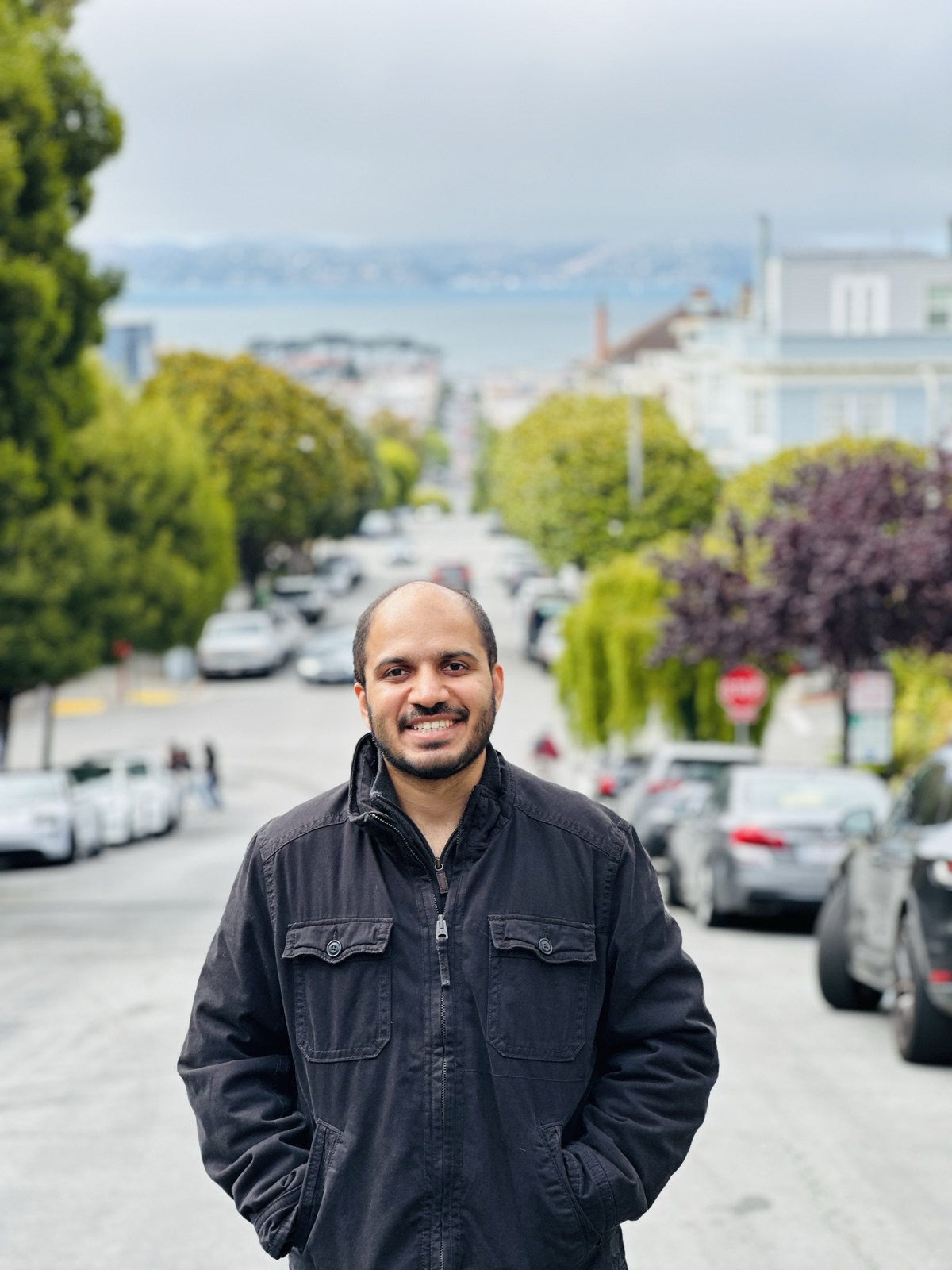
Portrait of Kumar Miskin
4
Peer-reviewed publications
44
Citations
2
First-author papers
3
Continents, industry + national lab
01 · About

Bridging ML and materials

I'm a Machine Learning Engineer and PhD candidate in Materials Science & Engineering at Johns Hopkins University, advised by Prof. Paulette Clancy, graduating December 2026. My work sits at the intersection of machine learning and physical simulation — building systems that learn from atomistic data to accelerate scientific discovery.

My research has taken me from a U.S. DOE national laboratory (Lawrence Livermore) to global industry (Sony, Tata Power) and academic groups across three continents. Along the way I've shipped production ML systems for computer vision, audio, and autonomous material discovery — and co-authored four peer-reviewed papers on physics-informed ML and materials.

Beyond the lab, I mentor students, teach graduate courses, and build full-stack AI products end-to-end.

Focus areas

Machine learning interatomic potentialsGraph neural networksBayesian optimizationActive learningHalide perovskitesSolid-state electrolytes & hydroboratesDefect & radiation physicsComputational materials discovery

Education

Ph.D. in Materials Science & Engineering
Johns Hopkins University
M.S. 2024 · Advisor: Prof. Paulette Clancy · Dissertation: physics-informed ML for scientific discovery
2022 – Dec 2026 (expected)
B.Tech Metallurgical Engineering & Materials Science + M.Tech Data Science
Indian Institute of Technology Bombay
Ranked 1st in Interdisciplinary Dual Degree Program
2017 – 2022

Honors & Fellowships

2025
Kai Pan & Li Wang Graduate Fellowship
Johns Hopkins University
2024–25
Donald S. Rodbell Memorial Graduate Fellowship
Johns Hopkins University
2024
Robert B. Pond Sr. Graduate Fellowship
Johns Hopkins University
2023
Edwin D. & Rachel Lowthian Endowed Fellowship
Johns Hopkins University
2022
Ranked 1st, Interdisciplinary Dual Degree Program
IIT Bombay
2017
KVPY Fellow
Dept. of Science & Technology, Govt. of India
2015
National Talent Search Scholarship (NTSE)
NCERT, Govt. of India
02 · Publications

Selected research

Four peer-reviewed papers spanning materials discovery, perovskite defect physics, and ML frameworks — with more in the pipeline.

01

How soft metal halide perovskite lattices heal following energetic particle bombardment

K. Miskin, G. Lemson, T. Arbaugh, E. Ragasa, N.Q. Le, P. Clancy · Journal of Materials Chemistry A, 2026

First authorDOI
02

Low-energy pathways lead to self-healing defects in CsPbBr₃

K. Miskin, Y. Cao, M. Marland, F. Shaikh, D.T. Moore, J.A. Marohn, P. Clancy · Physical Chemistry Chemical Physics, 2025

First authorDOI
03

PAL 2.0: A physics-driven Bayesian optimization framework for material discovery

M.S. Priyadarshini, O. Romiluyi, Y. Wang, K. Miskin, C. Ganley, P. Clancy · Materials Horizons, 2024

04

A chemistry-informed machine learning framework for closed-loop material discovery

P. Clancy, M.S. Priyadarshini, O. Romiluyi, Y. Wang, K. Miskin · Foundations of Molecular Modeling and Simulation, 2024

05

Deciphering the Dynamical and Structural Factors Controlling Na-Ion Transport in Hydroborate-based Solid Electrolytes

S. Yuan, I. Hsieh, K. Miskin, K. Kim, L. Wan · Under Revision, 2026

06

How flyer geometry affects shock wave propagation and spall on impact

K. Miskin, M. Zhang, K. Muly, Joel, K.T. Ramesh, P. Clancy · In Preparation, 2026

First author
03 · Experience

Research & industry

Jun 2026 – Present
Lawrence Livermore National Laboratory
Livermore, CA

ML Research Intern, CCMS

  • Training equivariant graph neural network interatomic potentials (Allegro, MACE, NequIP) on B–H polyhedral anion clusters for large-scale MLIP-MD simulation of solid electrolytes.
  • Building an end-to-end ML pipeline — feature engineering, feature selection, and Bayesian optimization — to discover novel hydroborate electrolyte compositions with maximized cation conductivity.
  • Applying graph-based sequence modeling to characterize ionic reorientational dynamics over time.
Aug 2022 – Present
Johns Hopkins University
Baltimore, MD

Doctoral Researcher, Clancy Group

  • Architected PAL 2.0, a physics-informed active-learning framework combining XGBoost feature selection, Bayesian optimization, and neural-network surrogates — 3× faster convergence than SMAC/Hyperopt across 12+ benchmarks.
  • Built hybrid GP + deep-learning surrogate models for high-dimensional search spaces, identifying top-performing perovskite photovoltaics while querying <11% of the design space.
  • Engineered a parallelized DuckDB + Python ETL pipeline processing terabyte-scale simulation data (500k+ atoms), automating defect event detection and cutting analysis time by 90%.
  • Discovered low-energy self-healing defect pathways in CsPbBr₃ via DFT + NEB — >95% agreement with experiment, published as two first-author papers.
Aug 2021 – May 2022
Indian Institute of Technology Bombay
Mumbai, India

Bachelor's & Master's Thesis

  • Trained CNN classifiers to identify NiTi phase transformations from 50+ MD simulations at 90%+ accuracy.
  • Modeled Suzuki segregation in FCC Cu with LAMMPS, evaluating stacking fault energies across 50+ impurity configurations.
  • Presented findings at ICSMA 19, an international conference in Metz, France.
Nov 2020 – Dec 2020
Sony, Atsugi Technology Center
Atsugi, Japan

Computational Science Intern

  • Built ML surrogate models on 200+ DFT simulations to predict solid-state battery properties, cutting simulation cost by 40%.
  • Benchmarked surrogate predictions against held-out DFT calculations, quantifying uncertainty to prioritize candidates for synthesis.
May 2020 – Jul 2020
Tata Power Strategic Engineering Division
Pune, India

Computer Vision Intern

  • Deployed a YOLOv5-based real-time license-plate recognition system, improving inference throughput by 35%.
  • Engineered an automated data preprocessing and augmentation pipeline for variable lighting, occlusion, and camera angles.
May 2020 – Jul 2020
1st Zoom, Bangalore
Bengaluru, India

Machine Learning Intern

  • Built a real-time audio-anomaly-detection pipeline (MFCC/spectral features, SVM/RF/LSTM) at 94%+ accuracy across 10,000+ samples.
  • Ran ablation studies across feature counts and architectures to systematically improve the precision-recall trade-off.
Jun 2019 – Jul 2019
New York University (Prof. Mark Tuckerman)
New York, NY

Summer Research Intern

  • Trained regression and classification ML models on XRD data from 30+ single crystals to estimate impurity concentrations with <5% error.
  • Applied PCA and feature engineering over crystallographic structure descriptors to drive feature selection.

Teaching, Mentoring & Service

  • Teaching Assistant, 3 graduate courses (Molecular Simulations, Phase Transformations, Computational Modeling) — JHU
  • Research Mentor — supervised 4+ undergraduate and 1 graduate researcher
  • Lab Manager, Clancy Research Group — coordinated weekly meetings for a team of 10+
  • International Student Representative, Materials Graduate Society, JHU
  • Mentor, IIT Bombay SMP & DAMP programs — guided 22 students
04 · Projects

Building things

From physics-informed ML frameworks to full-stack AI products — a few things I've built.

DevOps Genie

Multi-agent DevOps automation SaaS with human-in-the-loop infrastructure changes.

  • Multi-agent system (LangGraph, GPT-4/Claude) that classifies intent and routes to dedicated debug or infrastructure agents.
  • Infra agent generates Terraform/Kubernetes changes validated through custom MCP tool servers, raises a PR, and applies via Atlantis + ArgoCD.
  • Shipped full-stack (Next.js 15, Flask, Docker, real-time chain-of-thought UI); grew to 4 customers within 3 months.
Visit site
05 · Writing

Notes and receipts

Longer writeups behind the charts and analysis I post, with the data and code linked so every number can be checked.

04

October 5, 2026 · 7 min read

Yields up, gold down, Nasdaq at a record

Macro Receipts, issue 1. The 10-year closed the week at 5.28% while gold fell 3.7% and the Nasdaq 100 set a record. Plus bitcoin, the week ahead, and one chart worth the time.

Macro ReceiptsBondsGoldBitcoinRead article
06 · Contact

Let's talk

Open to research collaborations, ML & scientific computing roles, and interesting problems at the intersection of machine learning and science.